The Simpson family (and Mr. Burns) are now on Disney+. | 20th Century Fox
But what’s concerning about how the classic series’ new streaming home is treating the show?
In Watch This, Vox critic at large Emily VanDerWerff tells you what she’s watching on TV — and why you should watch it, too. Read the archives here. This week: The Simpsons. You may have heard of it. The first 30 seasons are now streaming on Disney+.
In the mid 2000s, Slate press critic Jack Shafer tried to figure out a method by which to pinpoint the moment when millennials and Gen-Xers had taken over the reins of the national media from the baby boomers. The answer he came up with was brilliant: Once younger generationswere in charge, we would start sprinkling articles with perfectlycromulent Simpsons references.
I don’t know if Shafer was exactly right — because the structure of what we think of as “the media” changed so much that it’s more likely this article will end up with a headline like “Why you need to start watching The Simpsons right now” than “Me not recommend The Simpsons? That’s unpossible!” — but I appreciate the spirit of what he was going for. The Simpsons is like oxygen if you were born after 1980 or so. It’s always been there. It will always be there.
That’s true even though the series’s best days are long behind it. I still mostly enjoy The Simpsons when I tune in for the odd episode, but those first 10-ish seasons form what is probably the greatest TV show ever constructed, and definitely the funniest. I could — and do — watch them over and over and over again, and now that they’re streaming on Disney+, I probably will continue to do so. (Yes, they were available for years on a platform called “Simpsons World,” via FX, but paying for a platform mostly to watch The Simpsons on it always felt a bit extravagant to me.)
And yet: Disney+ has some kinks to work out if it wants to win my full-throated Simpsons support.
The Disney+ episodes of The Simpsons are still great. But you’re missing the embiggened picture (literally).
The major problem confronting Simpsons fans who decide to stream on Disney+ is that the service isn’t showing the older episodes in their original aspect ratio. Most seasons of the show were formatted for boxy, standard-definition TVs, in an aspect ratio of 4:3 (meaning four units of width to three units of height). But on our modern widescreen TVs, which display images at a 16:9 ratio (16 units of width to nine units of height), 4:3 programs are displayed with black bars on either side of the picture, because it isn’t large enough to fill the entire screen. (For more on aspect ratios, consult this Vox explainer from the halcyon days of 2014.)
Many viewers feel like they’re not getting “the full picture” if they see those black bars, so most networks that rebroadcast old 4:3 programs in 16:9 zoom in on the center of the image. This process ends up cutting off visual information at the top and bottom of the screen. Sometimes, that’s not a problem, even if it is an inherently truncated image. But in the case of a show with so many sight gags like The Simpsons, the tops and bottoms of an image can be where some of the best stuff lives.
Observe:
1999 vs 2019
dug real deep into the archives for this one! ❗ lost a little weight , lost a little off the top , but same old me! pic.twitter.com/fojzOXTpTh
my favourite thing about old episodes of the simpsons is that lisa doesn’t have a body, which was a bold choice in the 1990s for a cartoon character. pic.twitter.com/1QWJ6aeD9z
Simpsons World allowed viewers to watch episodes in either the 4:3 aspect ratio or the 16:9 aspect ratio, so Simpsons purists (like myself) could get the full effect. So Disney+ should bring back the 4:3 episodes as soon as possible, lest I write more strongly worded articles to that effect. (“Dear Mr. Iger: There are too many Simpsons episodes in the wrong aspect ratio. Please eliminate three. I am not a crackpot!”)
(Simpsons World also allowed users to check out the DVD commentary tracks for the episodes, as well as special themed collections. My life is not necessarily hinging on whether these come back as it is with the 4:3 episodes, but, like, how hard could it be to throw them up there on Disney+, too?)
Look: Watching The Simpsons in 16:9 is still pretty darn amazing. These episodes are as funny as they were when they first aired in the 1990s, and some of the greatest television ever made lurks in the archives. (For my money, season four is the show’s best, but the fact that you can make credible arguments for basically any season from two through eight is proof of how good this show is.) The Simpsons possesses heart, wit, and genius in equal measure, and if you want to be my friend, then you need to understand why my wife and I so frequently say, “The door blew shut!” to each other.
In all likelihood, you’ve heard of The Simpsons before this article, and if you have, get thee to a Disney+ account. If you’ve heard of it but never seen it, well, come on already! And if this is somehow the first time The Simpsons has ever crossed your field of vision, you have so much delight, so much entertainment, and so many brightly yellow people ahead of you. If these ideas are intriguing to you, please subscribe to my newsletter.
The Simpsons is streaming on Disney+, though the most recent season is available on Hulu. New episodes still air Sundays on Fox at 8 pm Eastern, which is a whole thing, huh?
Italy’s parliament recently passed a law that requires parents to prove their children have the required shots before entering school, or else face a €500 (about $600 USD) non-compliance fine. | Plush Studios/Getty
Countries like Germany and Australia are tired of measles outbreaks — so they’re moving to fine anti-vaccine parents.
There’s a school of thought that refusing vaccines on behalf of your children amounts to child abuse, and that parents should be punished for their decision. We know vaccines are overwhelmingly safe and effective at preventing the spread of disease, and failing to immunize children can put them (and vulnerable people around them) at tremendous risk of illness or even death when outbreaks get rolling.
Now it seems Germany, Australia, and a number of other countries are fed up enough with vaccine-refusing parents that they’re experimenting with punitive measures. We haven’t quite reached the level of child abuse charges, but moms and dads in these countries may face fines if they fail to give their kids the recommended shots. In Australia, the directors of schools that let in the unvaccinated kids would be fined too.
Here’s a quick roundup of the global crackdown on vaccine-refusing parents:
In Germany on Thursday, lawmakers passed a law stating that parents need to prove they’ve vaccinated their kids against measles — or risk fines up to up to €2,500 (about $2,750 USD). Unvaccinated children also risk losing their places in school.
Italy’s parliament passed a law that makes 10 childhood vaccinations mandatory for kids up to age 16, and requires parents to prove their children are immunized before entering school or else face a €500 (about $560 USD) noncompliance fine. And kids who aren’t vaccinated are being told not to come to school.
In France, the health ministry made 11 vaccines — up from the current three (diphtheria, tetanus, and polio) — mandatory for children, though there’s no talk of a fine there yet.
Further afield, New South Wales, Australia, passed “no jab, no play” legislation in September 2017: the law bans unvaccinated kids from preschool and day care and fine the directors of schools that admit un-immunized children $5,500 Australian dollars ($4,400 USD). The law in New South Wales is modeled on similarly stringent laws in other Australian states, and across the country, parents with children who aren’t immunized aren’t eligible for child care benefits.
In the US, New York — where a large measles outbreak raged on for nearly a year — the government threatened parents who don’t vaccinate their children with a fine of up to $1,000.
Many countries where measles had been declared eliminated have recently lost that status, including Britain, Greece, Brazil, France, and Germany. With more than 1,200 measles cases this year — the largest number for any year since 1992 — the US also nearly lost its measles elimination status.
Before we consider punishing American parents, we might try this
Punishing parents for doing things that could harm their kids is not without precedent in the US. For example, there are laws in various states requiring parents to use car seats or seat belts for their children or else pay a fine or be docked driver’s license points. Same goes for firearm storage laws.
But before we start fining anti-vaxxers, there are some much more basic steps the US could take that would improve vaccination rates. And they involve simply making it harder for parents to opt out of routine shots on behalf of their kids.
Vaccines fall under the public health jurisdiction of the states. And there’s currently a lot of variation across the US when it comes to immunization requirements.
Even though all 50 states have legislation requiring vaccines for students entering school, 45 states allow exemptions for people with religious beliefs against immunizations, and 15 states currently grant philosophical exemptions for those opposed to vaccines because of personal or moral beliefs. (The exceptions are Mississippi, California, and West Virginia, and more recently, New York, and Maine which now have the strictest vaccine laws in the nation, allowing only medical exemptions.)
That’s why some states have been moving to crack down on this trend — most notably California — and they’re already seeing success in terms of boosting vaccine coverage rates.
In 2015, another measles outbreak prompted California’s former governor, Jerry Brown, to sign a bill, SB277, that abolished all nonmedical exemptions. And the California experience is instructive for other states that might want to close some of their loopholes.
According to the state health department, the number of kindergarten students in the 2017-2018 school year with all their required vaccines was 95.1 percent — a 4.7 percentage point increase over 2014-2015 and the second-highest reported vaccine rate since health authorities started tracking. A recent analysis, published in JAMA, put the opt-out rate at 4.8 percent by 2017.
That’s because something else was going on in California, and it offset that increase in medical exemptions: In parallel with abolishing nonmedical exemptions through SB277, California launched the “Conditional Entrant Intervention Project,” in 2015. The idea was that public health professionals would work with local health departments to identify schools granting high rates of conditional entrants, and work with them to bring them down.
Between 2014 and 2015, Omer and his colleagues found a sharp 23 percent decline in the conditional admission rate. So even with the rise in medical exemptions, the overall vaccine exemption rate still went down thanks to the decline in conditional vaccine entry to schools.
Omer told Vox, “I’m not discounting eliminating nonmedical exemptions. It’s a reasonable option. But it may not resolve all issues.” That’s why California is now cracking down on bogus medical exemptions, too.
That means simply outlawing nonmedical exemptions may not be a panacea in states that have a high percentage of parents using their social capital to spread anti-vaccine views. And as we saw in California, a ban on nonmedical exemptions could even backfire if other vaccine loopholes are left open.
But should look for ways that make it more inconvenient to opt out — by doing things like introducing exemptions with regular renewals. Fewer than a dozen states require annual — or more frequent — recertification for medical exemptions. So for example, if a child in a K-12 school gets an exemption in kindergarten, it will follow them through to college. She’ll never be asked to renew that exemption. Or, by cracking down on the conditional entry to school.
The Supreme Court on March 12, 2019. | Jonathan Newton/The Washington Post via Getty Images
Harvard law professor Martha Minow on the possibilities of restorative justice.
The American justice system’s approach to crime seems to be: Lock up as many people as possible. This is one of many reasons why we’re the most incarcerated country in the world.
Punishment has a role in any criminal justice process, but what if it was balanced with a desire to forgive? What if, instead of locking up as many people as possible, we prioritized letting go of grievances in order to create a better future for victims and perpetrators?
These ideas are central to a growing “restorative justice” movement in America, which seeks to bring together criminals, victims, and affected families as part of a process of dialogue and healing. Think of South Africa’s Truth and Reconciliation Commission as a model for this approach to justice.
A new book by Harvard law professor Martha Minow, titled When Should Law Forgive?, explores how the restorative justice philosophy might be scaled up and applied to the broader criminal justice system. Minow was dean of Harvard Law from 2009 to 2017 and is known for her work on constitutional law and human rights, especially the rights of racial and religious minorities.
Minow’s book is very much what the title implies: a plea for a justice system that emphasizes forgiveness over resentment, resolution over punishment. It’s not a call for abolishing punishment altogether, but it is an attempt to challenge some of our most basic assumptions about law and order.
What we have now, Minow argues, is a system that forgives some and not others, that favors the powerful over the marginal. And the only way to change it, she concludes, is to rethink the incentive structure that guides our entire criminal justice process.
I spoke to Minow about what that change might look like, whether it’s compatible with the American philosophy of justice, and why some people have reservations about abandoning the status quo.
A lightly edited transcript of our conversation follows.
Sean Illing
The law, as you point out in the book, already forgives, but it’s very selective about when and who it forgives. Who gets forgiven now and why?
Martha Minow
One of the central reasons to write this book is that many of the inequalities reflected in the distribution of power in this country help explain who gets forgiven and who doesn’t, particularly when there’s discretion that’s given either to a judge or to some other law enforcement official, like a police officer or a prosecutor.
When there’s discretion, then the biases of the individual come into play. One of my favorite cartoons shows a judge with a big bushy mustache and a large nose looking down from the bench at someone with the exact same mustache and nose saying obviously not guilty.
There’s an understandable but dangerous tendency to identify with people like ourselves and to not identify with people who are different. Developing a jurisprudence of forgiveness is partially about developing criteria for judging when and how discretion is exercised.
Sean Illing
Can you give me an example of a type of person or institution that receives forgiveness now?
Martha Minow
Right now, for example, we have a bankruptcy code that allows a for-profit college or university to declare bankruptcy but does not allow the students who took out loans to go there to declare bankruptcy. That reflects a political judgement about who or what can be forgiven. And it’s an expression of who has the power to lobby in this country, of who has the power to influence legislation.
We should be critical of these sorts of imbalances and fight for a system that extends the same sense of charity to less-powerful individuals and institutions.
Matt Jonas/Digital First Media/Boulder Daily Camera via Getty ImagesLoss Prevention Supervisor Lonnie Hernandez looks over some of the 55 letters he has received from shoplifters that have been through the Longmont Community Justice Partnership in Longmont, Colorado on August 19, 2016.
Matt Jonas/Digital First Media/Boulder Daily Camera via Getty ImagesA letter Lonnie Hernandez received from a shoplifter is seen on his desk. Part of his organization’s restorative justice program includes offenders writing letters apologizing for their crimes.
Sean Illing
What are some crimes right now for which there is no mechanism of forgiveness but you think there should be?
Martha Minow
America is the most incarcerating country on the planet, and one consequence of that is the presence of fines and fees that are layered on top of people who are convicted of a crime. Many systems actually impose on the criminal defendant the cost of a probation officer or the cost of monitoring anklets with which they’re discharged, and the fines and fees accumulate.
These are often people without a lot of resources and there’s no forgiveness mechanism and therefore they can face even more incarceration for nonpayment. I think that’s an area where absolutely we should have mechanisms of forgiveness. Although there’s some efforts now to do just this, it’s not nearly enough.
Sean Illing
Who would you say gains the most from a more forgiving legal system?
Martha Minow
Not to be too simplistic, but I think we all do. In an interpersonal context, the one who forgives often gains as much if not more than the one who was forgiven. To let go of a grievance is to be freed in many ways.
More transparency and a more forgiving and pragmatic approach to crime also benefits the entire community because it constrains law enforcement and prevents the needless break-up of families, which is what incarceration does.
Sean Illing
There’s another prosecutor problem, though, which you discuss in the book and which New York Times legal reporter Emily Bazelon has written about. We have a significant number of overzealous prosecutors, people who are benefiting politically from from locking up as many people as possible. How do we address that?
Martha Minow
The emergence of progressive prosecutors is encouraging. It’s part of a broader movement to support and demand the election of people who are very clear about their intention to be less punitive and to pursue alternative models like restorative justice.
Another technique, of course, is to not have elected prosecutors at all, which is flawed for countless reasons. We can also develop ways to measure and reward other indicators of success besides how many people did you lock up. For example, we should pay more attention to how many people end up falling back into the criminal justice system after their initial contact with it.
If prosecutors are just tossing people in jail who continue to commit crimes after serving time, well, that’s obviously bad. But that’s just not part of the incentive structure right now.
Sean Illing
Do you worry that more forgiveness means prioritizing the interests of perpetrators over the needs of victims?
Martha Minow
I certainly do. And as much as I criticize mass incarceration, I do believe that we need vigorous law enforcement, and often the people most victimized by crime are the most disadvantaged. They’re poor people, people of color, people who are most likely to be targeted by violence. So while we need to talk about fairness, there are definitely dangers in taking the concerns of perpetrators too far. At the same time, we can’t let that concern get in the way of thinking more broadly about how to construct a more just, balanced, and forgiving system.
Sean Iling
Some people have raised concerns that there’s an imbalance in terms of our expectations about who should forgive and that simply calling for more forgiveness risks normalizing certain forms of oppression or violence. How do you respond to this?
Martha Minow
These are very important objections and I don’t think it’s accidental or unique to our society that people with relatively less power are either more likely to be expected to forgive than people with more power.
People of color and women in particular, at least in our society, have developed more muscles when it comes to forgiveness, even when they may be more often on the receiving end of harms. We see this now with the Me Too movement where very often someone who’s been identified as engaging in sexual assault or sexual harassment then expects their victims to forgive, and that’s often an expression simply of the power that they had in the first place.
I don’t think the problem here is forgiveness, though. Forgiveness is a resource every human being has and indeed every religion, every major moral philosophy, and every society has tried to cultivate. The real problem, as you suggested, is the unequal expectations around who should forgive and when.
Sean Illing
The idea of forgiveness seems at odds with our whole philosophy of justice in this country. Do we need a fundamental shift in how we think about justice and law?
Martha Minow
Every law student learns that there are multiple purposes of the criminal justice system. Deterrence of crime is one, incapacitation of people who are dangerous is another, but so is retribution and finally rehabilitation. Those are the four classic goals.
The United States doesn’t have a criminal justice system — we have many, many local fiefdoms of criminal justice systems and many of them have been moving away from rehabilitation for a long time and very much toward retribution and not even always thoughtfully using deterrence as a goal.
Since most of our system operates by plea bargain, much of it’s not even public. Prosecutors often work by stacking up as many charges as possible so that people will plead to something and then using that as leverage to press them into some admission of guilt and then some kind of punishment.
So how does that feed back into a deterrent system? It’s not clear. I think we’ve swung way out of balance from the goals that the system itself is supposed to have.
I think that we can learn some from other systems. I’m very encouraged when I hear that there are delegations from a city in the Midwest going to Norway or Finland to learn about how they engage in more restorative practices. There are increasing experiments in this country. The District of Columbia has decided to use restorative practices for its juvenile justice docket. I think there are a lot of people from a lot of different walks of life, different political persuasions, who are saying, “There’s something very broken here and we can change.”
Sean Illing
Let’s say we did shift to a more forgiving legal system, are there any trade-offs that concern you? Is there something our current system does well that we might lose if we made this change?
Martha Minow
I think we have to step back and recognize that we have too many people incarcerated and too many people in debt and we need a reset. That’s what I’m calling for.
But are there risks? Of course. One danger is that introducing more forgiveness into the system could further jeopardize the principle of equality under the law if it’s not applied fairly. If we don’t eliminate the imbalances we were talking about earlier, then more forgiveness could easily deepen the inequalities that already exist.
So, above all, we have to ensure that the benefits of a more forgiving system extend to everyone and not simply to the most powerful forces in the country. If we can do that, the country as a whole will be better.
Sign up for the Future Perfect newsletter. Twice a week, you’ll get a roundup of ideas and solutions for tackling our biggest challenges: improving public health, decreasing human and animal suffering, easing catastrophic risks, and — to put it simply — getting better at doing good.
Kristen Stewart is the Hollywood Chris we deserve. | Columbia Pictures
Kristen Stewart genderqueers the Chris archetype in her new movie.
We have a new Hollywood Chris in town, and her name is Kristen Stewart.
Traditionally, the Hollywood Chrises comprise the Chrises Evans, Pine, Hemsworth, and Pratt: a perfect Ken doll quartet of white male blond and blue-eyed action stars named Chris. But with Charlie’s Angels, out this Friday, Kristen Stewart makes a powerful argument that she belongs in their midst.
I do not make the suggestion that we add a new Hollywood Chris to the canon lightly. Contrarians are always trying to petitionfor Chrises who aren’t blond and blue-eyed white dudes, like the Chrises Messina, Waltz, Rock, and Baranski. But the canonical four share a certain essential Chris-ness that is hard to match.
For one cannot become a Hollywood Chris merely by being named Chris and working in Hollywood. No, there is something aspirational in the idea of the Hollywood Chris, a pure and wholesome soft jock ideal that makes being a Hollywood Chris a status that must be earned. As Kate McKinnon put it on SNL in 2017: “You’re all white guys, you’re all named Chris, and you’re all kind of scruffy and squinty and jacked, but in a sweet way.”
In Charlie’s Angels, Kristen Stewart proves that where Pratt is falling, she is ascendent. Kristen Stewart has that essential Chris-ness by the bucket-full. She has finally come into her full powers as a Hollywood Chris — nay, a Hollywood Kris. And in the process, she’s queering our understanding of the poles of Hollywood masculinity and femininity.
In Charlie’s Angels, Kristen Stewart makes it clear that the ditz and the Chris are two sides of the same coin
I want to be clear: When I say that Kristen Stewart is performing Chris-ness in the new Charlie’s Angels, I don’t just mean that she’s alsoblond now (although she is), or that she’s alsoin an action movie (although she is). I mean that she’s performing the sweet and earnest jock persona that is at the heart of the Hollywood Chris ideal, and she is making it genderqueer.
Stewart’s character in the movie is Sabina, the kind of earnestly nice superspy who will die to protect her friends but always fumbles her way through her quippy punchlines. She gets distracted during one stakeout because she’s looking at cute dog pictures, and then again during another because she’s checking out a girl. In another movie, she’d be the blond ditz to co-star Ella Balinska’s sleek badass — the Cameron Diaz to Balinska’s Lucy Liu — but Stewart plays Sabina as too butch for her to read as a ditz the way her Angelic forebears did. She’s all leather jackets and short bangs, not crop tops and feathered hair.
Instead, Sabina reads as a superhumanly athletic and powerful spy with the heart of a loveable golden retriever, an overwhelmingly sweet jock. With just a touch of performed masculinity, the ditz becomes a Chris.
And the idea that the ditz and the Chris are two sides of the same gendered coin is built into the structure of this new Charlie’s Angels iteration. The movie opens on Sabina seducing a mark into complacency while she’s in high femme mode; her hair is long and blond and wavy, her nails are pink, her dress is tiny, and her eyelashes bat constantly.
We know what to expect when we’re given a scene like this one in a Charlie’s Angels movie. Clearly, Sabina is doing that classic Charlie’s Angels thing where an Angel dresses up for the male gaze for Purposes of Her Own, and she will eventually reveal herself to be hiding some surprising competence under her apparent ditziness, just the way Cameron Diaz did in the 2000 Charlie’s Angels. It’s a beloved trope because it allows the audience the pleasure of watching a pretty woman in a sexy outfit, while also allowing us to feel smug for recognizing that we are watching her for the correct reasons, unlike the mark, who is watching her for the wrong reasons.
But as the scene goes on, Stewart keeps gently undercutting the idea that she is there to be gazed at, or that the poles she’s operating between are the traditionally feminine extremes of ditz/ice cold badass.
First, she gives us more than a hint that she’s interested in doing some gazing of her own, and that her gaze will be queer. There’s a moment where her mark tells her to picture a woman with power tools or a woman driving a taxi (because just because women can do anything doesn’t mean that they should), and the camera holds her face in extreme closeup as her eyes go wide. Sabina’s expression can read as amusement at the idea that she’s supposed to be scandalized, or anger at her mark — but it can also read as lust at the idea of these butch women.
And after a fight breaks out as expected and a triumphant Sabina subdues her mark and whips off her wig, she reveals hair that is much too short to flip instead of doing the classic Charlie’s Angels hair toss. And as she drops the character voice she’s been doing, Sabina’s posture slides and slouches into a stance that’s a little more relaxed, a little more bro-y than anything we’d normally expect from the ditz.
The camera doesn’t linger on these details, and they’re not the point of the scene. (The big punchline comes when Ella Balinska’s badass Jane, fed up with Sabina’s admonitions that Jane should have more fun, shoves Sabina off a roof.) But this rapid reversal from ditz to bro — from a Cameron to a Chris — underlies everything else Sabina does over the course of the film.
Traditionally, the ditzy high femme superspy is a post-feminist “have your cake and eat it too” trope. On the one hand, the ditzy spy shows us that femininity can be a powerful weapon, and that there is no shame in soft power. But on the other hand, there’s always been a sense in which the ditzy spy seems to quell our fears of powerful women. The ditz is allowed to be incredibly competent because she’s still conventionally feminine, and her femininity makes her competence unthreatening.
No such contradiction underlies the Chris. Chrises are highly competent and also a little bit sweetly dorky, occasionally even dim in a puppyish way, but their dimness never undercuts their heroism, their aspirational masculinity. Chris Hemsworth’s Thor can completely fail to understand how to order a coffee refill at a diner and still be a godlike hero. Chris Evans’s Captain America can get nerdily excited over finally understanding a pop culture reference and still break a log in half with his bare hands.
When Cameron Diaz does a silly dance in the 2001 Charlie’s Angels, she wins her fight in spite of it. When Chris Pratt does a silly dance in the first Guardians of the Galaxy, he wins his fight because of it. Diaz is allowed to win in spite of her relatable silliness; he is able to win because of his.
By switching seamlessly from a ditz to a Chris, Sabina — or rather, Kristen Stewart — is able to take for her own the mantle of competence that Chrises are assumed to wear by birthright. She is able to be a heroic figure because of her golden retriever-ish sweetness and her over-enthusiasms, not in spite of them. She genderqueers the Chris paradigm, and for that reason, Kristen Stewart is truly the Hollywood Chris we need in 2019.
President and CEO of Saudi Aramco Amin Nasser (left) and Aramco’s chair Yasir al-Rumayyan attend a press conference in the eastern Saudi Arabian region of Dhahran on November 3, 2019. | AFP via Getty Images
The oil company that made Saudi Arabia rich is going public. Some say the timing couldn’t be worse.
Pop quiz: What’s the most profitable company in the world? Apple? Google?
Nope. Those two don’t even come close. The answer is Saudi Arabia’s state oil company, Aramco. In 2018, Saudi Aramco made $111 billion dollars in profit. The second-most profitable company, Apple, made $60 billion that year.
On November 3, Aramco officially announced its plan to go public for the first time in the company’s 86-year history. Energy historian Ellen R. Wald joined Today, Explained to explain why Aramco’s initial public offering (IPO) is such a big deal.
As the most profitable company in the entire world, she says, the company’s IPO is going to set major records. And since it’s the largest oil company in the world, it’s likely that a lot of everyday things we use — from plastic to the energy fueling our cars — touches this company.
“In the United States,” Wald says as an example, “Aramco owns the largest refinery in the entire country. And it also owns Shell Gasoline Stations in the southeastern United States. So many Americans may be buying oil — or gasoline — that is made by Aramco, and they don’t even know it.”
But some say the timing for the Aramco IPO couldn’t be worse. One reason for that: Some people think thatthe world has or will soon reach peak oil demand. Another, Wald explains, is the “PR nightmare” that Saudi Arabia created with the killing of Saudi dissident journalist Jamal Khashoggi:
[The killing of Jamal Khashoggi] definitely soured investors and financiers on Saudi Arabia in general. The idea is that the money from this share sale would go to support the Saudi Arabian monarchy that has done and continues to do many horrible things, both in terms of human rights. … And so there are a lot of people out there who look at that and say, “No, I’m not touching this because I don’t want to help these people.”
To understand the significance of Aramco’s upcoming IPO, you have to know the company’s history. If you want to learn all about it, here’s a lightly edited transcript of Wald’s conversation with Today, Explained host Sean Rameswaram.
What exactly is it that takes Saudi Aramco from an extremely profitable oil company to the most profitable company in the world?
Ellen Ward
The really key year here is 1972. The United States could no longer pump more oil to meet rising demand. So instead of being able to accommodate America’s vast thirst for oil at the time, they had to import oil from elsewhere. And one of the big sources of that was Saudi Arabia. And Saudi Arabia was pumping and pumping more to meet that demand. All of those gas-guzzling cars, they were meeting that demand.
And the Saudis took note of this. The oil minister at the time, his name was Zaki Yamani, he and other oil-producing countries in the Middle East were already united in the cartel organization we know today as OPEC [the Organization of the Petroleum Exporting Countries].
And they got together and they said, essentially, “We know you’re in a difficult position, and we want to raise the price of oil because the price of oil is just too low.” And they negotiated with the representatives of big oil companies, including the American ones, and they could not reach an agreement. And they said, “You know what? We can’t reach an agreement. [So] we’re going to unilaterally raise the price of oil.”
They do this in conjunction with the Arab-Israeli War of 1973, along with an oil embargo. And the effect was very immediate. The price of oil skyrocketed, and in fact caused a recession in the United States.
But what it also did was help oil companies make a lot more money from this, including Aramco and including the Saudis. And what did the Saudis do with all this cash? Well, they put it into their own palaces and into their own country. But they also used it to buy the company from the Americans. And then in 1988, the Saudis eventually renamed it Saudi Aramco.
Sean Rameswaram
How has [the company] changed from what it was in the 1970s to now?
Ellen Ward
In the 1970s, Aramco was basically an oil-pumping machine. They pumped oil out of the ground, and most of that was sold as crude oil to the four American companies that owned it. Now, it’s much more like an international oil company like BP or Exxon or Royal Dutch Shell or Total in that they pump oil, they have crude oil assets, but they also have a range of what we call “downstream assets,” which are refineries, petrochemical companies. And they have these in Saudi Arabia, but also all over the world.
Sean Rameswaram
What’s the relationship between this company and the Saudi Arabian monarchy right now?
Ellen Ward
It’s much more difficult now than it was. Their first Saudi CEO at the time, a man named Ali al-Naimi, he negotiated with the king to keep Aramco separate from the Saudi government. Yes, they have a board of directors that is appointed by the government that kind of approves their plans. But, essentially, they get to decide how much money they want to spend on capital expenditures, what kind of projects they want to do, and what their strategy is. And that’s unique amongst national oil companies.
So Aramco is not quite a national oil company, but it’s not a private oil company either. It’s somewhere in between, and it has a high degree of independence. That is changing, though. And we’ve seen that change come about since the ascension of King Salman [bin Abdulaziz Al Saud] to the throne and also of his son, the young Crown Prince Mohammed bin Salman, and they are taking a much more active role in the larger strategy of the company.
They’re not trying to run it day to day, but they are saying things like, “We want you to buy this petrochemical company” or “we want to go public and this is how it’s going to be.” And that’s been a very different thing for Aramco to have to deal with after so much independence. And it has created some tension.
Sean Rameswaram
It sounds like you’re saying it’s hard to separate the Saudi monarchy from Aramco.
Ellen Ward
It’s hard to separate them from Aramco in terms of the big decisions. Aramco isn’t nearly as intertwined with the government as any other national oil company. But this is the real issue with this IPO. Normally when a company does an IPO, the money is going to go to the company to expand, to do new things, but that’s not the case here.
The monarchy wants to monetize Aramco shares and to take that money that they make from the share sale and put it into things that are not involving the company. So they want to put it into their sovereign wealth fund, which is designed to make investments both in companies in Saudi Arabia to help promote economic development and diversification, but also companies all over the world international companies. And use it to make investments in tech companies and in all sorts of crazy firms that they’ve been investing in, like Magic Leap virtual reality or a tech company or Uber or Tesla.
Sean Rameswaram
This is supposed to be one of the wealthiest countries in the world, right? How do they need the cash for some “sovereign wealth fund” that will finance startups?
Ellen Ward
Saudi Arabia has essentially a one-trick economy, which is selling oil. And they’ve done pretty well with that. But that doesn’t always go very well for the general economy at large, doesn’t necessarily employ everyone. It doesn’t foster small-business development. It doesn’t foster a vibrant economy.
What if oil prices tank and stay low for a long time? What if the oil runs out? At some point, the oil will run out. So the Saudi government has put together this plan that’s designed to diversify the economy so that they’re no longer wholly dependent on a single commodity.
Sean Rameswaram
Do we have any idea how this IPO will go in December?
Ellen Ward
One of the interesting things is that this company makes $111 billion dollars in profit. That’s what it made in profit in 2018. Apple I think is the next-most profitable company, [and] only made $60 billion in 2018.
And people are not going to just toss that aside, especially in a market today when so many of the IPOs that come up are companies that don’t even make a profit and have never made a profit and may never make a profit. So when an IPO comes along for a company that is immensely profitable, it’s very hard to turn away.
If the IPO doesn’t go very well — and there’s a distinct chance that it might not go very well — it could affect other oil companies’ earnings. Although I would say that if it doesn’t go well, that’s reflective more of the Saudi government than it is of Aramco itself.
If the IPO doesn’t go very well and politically the Saudi monarchy looks bad, that could be very far-ranging, particularly for the United States, which maintains strong diplomatic ties to Saudi Arabia. So it’s something that people definitely need to be on the lookout for; this could in some ways potentially fundamentally alter the balance of power in the Middle East.
A grand jury found the shooting death of De’Von Bailey was justified.
The Colorado Springs police officers who shot and killed a black 19-year-old will not face charges, a grand jury ruled Wednesday. The use of lethal force in the death of De’Von Bailey, which had sparked protests over what appeared to be another case of police brutality from white officers against a black teenager, was found to be justified.
On August 3, two officers shot and killed Bailey after they stopped him and another man on the street and questioned them about an alleged armed robbery. Body-cam footage recorded Bailey running away from officers during the stop, who then shot Bailey in the back three times. He later died in the hospital. Officers found a gun in his pants immediately after shooting him, though attorneys for Bailey’s family argued the footage showed he wasn’t a threat to the officers.
According to District Attorney Dan May, the grand jury found that Bailey’s fleeing justified the officers’ shooting, citing state laws that protect police who shoot fleeing suspects. However, these statues are controversial, because they conflict with a U.S. Supreme Court decision that determined such shootings to be unconstitutional.
In October, May announced that a grand jury would be investigating whether to charge the officers who shot Bailey. Prior to the grand jury, Bailey’s death was investigated by the El Paso County Sheriff’s Office, then the District Attorney’s Office for review. However, Bailey’s family has long called for an independent investigation of the teen’s death, arguing that the law enforcement entities were too close. Colorado Gov. Jared Polis and other elected officials echoed those calls.
“Our nation is grappling with difficult challenges concerning race and how we treat one another,” Polis said at a news conference at the time. “It is more important now at this moment in time that our law enforcement agencies go above and beyond to maintain public trust and confidence.”
The grand jury’s decision was a “no true bill,” which dismisses the defendants when a grand jury finds not enough evidence to charge them, according to a statement from Colorado Springs Police Chief Vince Niski via CNN.
“This is the exact result that the process was designed to yield,” Mari Newman, an attorney representing the Bailey family, told Vox on Thursday. “When a tainted investigation is presented by a biased prosecutor, a grand jury can only come out one way. This is the very reason why we have called for an independent investigation and an independent prosecution from the beginning.”
Body cam footage of the police shooting outraged the community
Calls for justice rang louder after the release of graphic body-cam footage of Bailey’s death.
In August, 12 days after the shooting, the Colorado Springs Police Department released video of the 911 call and footage. According to the transcript and recording of the call, a man told the dispatcher that he was walking down a street when he was approached by two men who demanded whatever was in his pockets and then hit him. He said one of the men pulled out a gun and then took his wallet. He then walked to a nearby office to call the police and report an armed robbery. He mentioned he had a history with them and knew who they were.
In the body-cam footage from the same day, an officer gets out of his car and stops two men, asking them about a possible assault. Bailey appears to take a water bottle out of his pocket, then is told by the officer to keep his hands out of his pockets. The officer then asks them their names and tells them to put their hands up. He said that they had a report about two people with similar descriptions having a gun on them, and that the officers were going to search them for a weapon.
As a second officer walks up behind Bailey, Bailey begins running away from the officers. They run after him and tell him to put his hands up before shooting him in the back multiple times. Bailey falls to the ground. After the officers cuff Bailey and call for medical assistance, the officers find a gun in his shorts and cut the shorts off him.
Following Bailey’s death, protesters in Colorado Springs came out to decry gun violence and police brutality, saying Bailey was murdered and criticizing the police department for putting the officers who shot Bailey back on active duty. At one protest two days after Bailey’s death, two white men were arrested after they approached protesters and drew their guns. In September, protesters interrupted Colorado Springs Mayor John Suthers’s State of the City speech with chants of “justice for De’Von,” and were pushed out of the banquet hall, then later removed from outside of the room by the police.
Colorado’s “fleeing felons” statute runs up against a Supreme Court decision
Despite arguments from Bailey’s family’s attorneys that the teenager didn’t pose a threat to officers when he fled, Colorado law often protects police who shoot suspects who are running away, according to the Denver Post. The statue itself is often referred as “fleeing felons,” though Bailey was but a suspect.
”If the officer has a reasonable belief that the person has used a deadly weapon in a crime and is still armed, they can use deadly force to prevent that person from being a fleeing felon with that deadly weapon,” May, the district attorney, told BuzzFeed News.
Colorado law supports this, upholding that cops can use deadly force if they “reasonably believe that it is necessary” to defend themselves or someone else from imminent harm, but it also goes a step further to protect cops in shooting suspects who flee. Specifically, Colorado cops can use lethal force to “effect an arrest or to prevent the escape from custody, of a person whom he reasonably believes…has committed or attempted to commit a felony involving the use or threatened use of a deadly weapon.”
While supporters of the law argue that the statute prevents “fleeing felons” from getting away and perhaps further endangering their community, the Post points out that a 1985 U.S. Supreme Court case already determined the general shooting of fleeing suspects to be unconstitutional. In Tennessee v. Garner, the court ruled that law enforcement is in violation of a person’s constitutional rights when they shoot a fleeing suspect who isn’t an imminent threat.
According to the Post report from August, the Supreme Court ruling was cited by attorneys representing Bailey’s family as possibly applying to Bailey’s case. However, applying the ruling to Bailey’s case would have been difficult, according to Nancy Leong, a professor of the University of Denver’s Sturm College of Law.
“How do we know that the officer willfully violated someone’s rights?” Leong told the Post in an email at the time. “It’s quite rare for officers to be convicted under this statute.”
Newman told the Post that Bailey’s family intends to pursue civil litigation.
Andrew Yang poses for a selfie. | Ethan Miller/Getty Images
For politicians, the buzziest new social video app presents a risk and an opportunity.
In 2015, Hillary Clinton was “yas queening” all over the internet. She had an official Snapchat account with a “Yaaas, Hillary!” logo that was also a T-shirt, a posed #yas photo with the stars of Broad City, custom Hillary Bitmoji, ironic cross-stitch art, and other signifiers of “yas” culture that’s since become emblematic of a certain kind of blinkered white feminism. An attempt to reach millennials with a passing familiarity with stan culture, it was also an extremely strategy easy to mock. As Amanda Hess wrote at the time in Slate, “American culture does not exactly appreciate the image of the ‘authentic’ older woman, but boy does it hate the older woman who strains to stay relevant.”
Hillary Clinton lost the election. That fact certainly can’t be attributed solely to a social media voice that many criticized as insincere and pandering, but it had a lasting impact on the ways we expect politicians to behave online.
It also might offer a clue on why so few politicians have a presence on the buzziest social media app of the moment, TikTok. Since its US launch in August 2018, the short-form video app has exploded in popularity, having been downloaded more than a billion times in 2018 and boasting 27 million active American users as of February 2019. Both Facebook and Instagram have launched competitors (or clones, depending on whom you ask), and celebrities like Will Smith, Ariana Grande, Ed Sheeran, and Reese Witherspoon are now flocking to the app en masse.
Politicians, meanwhile, have been understandably hesitant to hop on board. Like all social media apps, TikTok has its own vernacular, and any transgressions of that shared language and sensibility stick out like, well, septuagenarian politicians on a social media app meant for teens. The fear of coming off as insincere or being flooded with “ok boomer” comments is a real one. The other outcome? A TikTok presence that fails to leave a mark, like Julian Castro’s account, which currently only has 470 followers.
Still, that leaves an opportunity. Enter: the TikTok account of an equally stodgy publication that has, against all odds, managed to feel truly native to the TikTok ecosystem. It’s the Washington Post’s, which since its debut this spring has amassed a quarter-million followers and a legion of superfans who praise its goofy premises and unserious tone. So far, three candidates — Andrew Yang, Beto O’Rourke, and Julian Castro — have appeared on it.
The Washington Post’s TikTok’s success is the direct result of its creator and biggest star, 28-year-old Dave Jorgenson, who previously created humor and satire videos for the newspaper. A scroll through the Washington Post’s TikTok account will show Dave making self-deprecating jokes about being an adult on the app, Dave occupying the role of “the TikTok guy” in meetings, Dave doing silly 15-second sketches with the paper’s fashion, gaming, and economics reporters.
Jorgenson attributes the growth and fanbase of the account to his spending two months watching and listening to videos on TikTok instead of rushing to quickly turn around content. “If you’re gonna launch anything, whether you’re a newspaper or a brand or a company, you need to understand the app, otherwise people will see right through you,” he says. “Especially on TikTok, because the whole thing is that it’s mostly just raw videos set to music.”
The Washington Post, however, has what regular TikTok users don’t: access to very important people. In October, 2020 Democratic presidential candidate Andrew Yang just happened to be scheduled to visit the Washington Post’s offices filming an unrelated segment when Jorgenson was able to strike a plan with Yang’s team about filming a TikTok.
Yang’s team was already a fan of the Post’s TikTok account; the campaign has also leaned heavily on the fact that he is a tech entrepreneur. “We didn’t really have to sell it to Andrew Yang,” says Jorgenson. “He was like, ‘If they think it’s great, I’m going to do it.’” It’s a particularly impressive feat considering the resulting video was actually poking fun at Yang’s low polling numbers. “Finally relaxing after a full day of interviews and meeting people,” reads the caption on the first segment, followed by “Still polling at 3 percent” against a backdrop of Yang dancing in celebration.
Though neither Beto’s nor Castro’s team replied to a request for comment, Yang’s press secretary told Vox, “We’re constantly exploring ways to reach new audiences and voters, and the TikTok video with the Washington Post is certainly one of those ways.”
Since the election of Donald Trump proved politicians could tweet rambling, often nonsensical stream-of-consciousness sentences and still win over voters, politicians have approached social media with an increased candidness. New York Rep. Alexandria Ocasio-Cortez has posted her skin care routine to her Instagram stories; O’Rourke live-streamed his haircut; Elizabeth Warren posts videos of herself calling small-dollar donors to social media and makes a point to pose for every single person who wants a selfie after her town halls. In an age where we expect to be welcomed into the homes and lives of everyone we follow online, connecting with politicians has never felt so intimate.
Politicians have historically been pretty terrible at social media. A cursory glance at Mike Huckabee’s tweeting habits will illustrate as much — the former Arkansas governor and presidential candidate was once described by Fast Company as “the least funny person on Twitter.” Even cool-ish, young-ish presidential candidates are sometimes bad at tweeting. Cory Booker has made the same joke — a bit of PG-13 wordplay about coffee and sleep — 14 times over the past decade.
Aidan King, a senior strategist at Middle Seat consulting who has worked on presidential campaigns for both Bernie Sanders and O’Rourke, says that there’s a certain degree of apprehension in approaching any new social media platform. If candidates don’t know precisely who they’re speaking to, their message can be warped into something else. “There’s nothing worse for a political campaign than going viral for the wrong reasons,” he says.
TikTok, with its legions of irony-steeped teens, presents a specific danger. “The zoomers can be pretty ruthless, and it’s also clear which candidates they like a lot,” explains King. “Young people are really into Bernie Sanders, Andrew Yang, Elizabeth Warren, so I can understand why other candidates in the 2020 races just don’t really want to mess with [TikTok]. Joe Biden going on a platform that adores Bernie Sanders and Alexandria Ocasio-Cortez is a recipe for disaster. They know the audience well enough to know they wouldn’t really get along with the people there.”
The Washington Post’s TikTok, though, is a controlled environment where candidates have little to lose, even when the content is unlike anything a political PR team would have typically come up with. “There’s just this very positive feeling around TikTok. Even if they are self-deprecating, they’re pretty wholesome,” Jorgenson says. “While the text in front of Andrew Yang was deprecating, it’s very funny. How could that hurt you?”
Jorgenson hopes to get every 2020 Democratic candidate in a video and has reached out to multiple candidates, but there is one white whale in particular. “I think if we get Bernie, then we have done our job, because I don’t know how we’re going to. But I’d be very proud of myself,” he laughs.
There are concerns over TikTok’s ties to the Chinese government (its parent company Bytedance is based in Beijing) and its willingness to bow to conservative governments by censoring pro-LGBTQ content, but the app has always wanted its content to remain politics-free. It recently announced it would ban political advertising out of a desire to remain a “positive, refreshing environment.” While nothing is stopping politicians from using the app, they may be hesitant to engage with one that will soon be under investigation by the Committee on Foreign Investment in the United States.
It’s also likely it simply isn’t worth building a following on an app where a sizeable portion of its users aren’t even old enough to vote. For now, one-off sketches with the TikTok expert over at the Washington Post will do.
Sign up for The Goods’ newsletter. Twice a week, we’ll send you the best Goods stories exploring what we buy, why we buy it, and why it matters.
Former US Ambassador to Ukraine Marie Yovanovitch is surrounded by lawyers, aides, and journalists as she arrives at the US Capitol October 11, 2019 in Washington, DC. | Chip Somodevilla/Getty
Yovanovitch’s fate is a prologue to the main scandal.
House Democrats’ second public hearing in their impeachment inquiry kicks off at 9 am ET on Friday, featuring the testimony of former US Ambassador to Ukraine Marie Yovanovitch. You can watch the hearing on CSPAN or other major networks, and we’ll embed a livestream in this post once one is available.
After hearing from witnesses who had a front-row seat to Trump officials’ attempts to pressure Ukraine’s president Volodymyr Zelensky this summer, Friday’s hearing will take a step back chronologically, to an earlier point in this saga.
Yovanovitch, a career diplomat who was widely respected at the State Department, was ousted from her ambassador post back in April, just days after Zelensky was elected. The alleged quid pro quo efforts unfolded after she left Kyiv. But her ouster is a story in itself, one that showcases the influence Rudy Giuliani and certain Ukrainian officials gained over US policy.
It began, Yovanovitch has said, with ominous rumors that Giuliani and a top Ukrainian official were going to “do things” to her. In the months that followed, Giuliani, Fox News hosts, and even the president’s son Don Jr. would call her corrupt or publicly push for her ouster. She was eventually told to leave Kyiv and return to the US on the next plane.
Months after Yovanovitch’s exit, President Trump made a menacing-sounding remark about her to Zelensky on the phone: “She’s going to go through some things,” he said.
Yovanovitch told her side of her story, at length, to House impeachment investigators last month. “I couldn’t imagine all the things that have happened over the last six or seven months,” she said. “I just couldn’t imagine it.”
Prologue to a scandal: the campaign against Ambassador Yovanovitch
Yovanovitch was a career foreign service officer for over three decades; she was sworn in as ambassador to Ukraine in August of 2016, a post she’d hold until her abrupt removal from it in the spring of this year. (She’s still a State Department employee, but she is currently spending a stint at Georgetown University as a teaching fellow.)
According to the accounts of other witnesses who have testified in the impeachment inquiry, Yovanovitch was highly respected among her colleagues. But she ran afoul of two powerful people: Trump’s personal lawyer Rudy Giuliani and Ukraine’s prosecutor general (under the previous administration) Yuri Lutsenko.
In an apparent effort to win President Trump’s favor, Lutsenko and Giuliani began discussing the possibility that the Ukrainian prosecutor general could launch investigations into Trump’s enemies. He’d investigate Burisma (the Ukrainian natural gas company whose board included Hunter Biden) as well as purported Ukrainian interference in the 2016 US presidential election.
But Yovanovitch got in the way. When Lutsenko asked the US embassy to set up meetings with FBI or Justice Department officials, she objected, saying that’s not the typical way these things are handled. Instead, she encouraged him to meet with the FBI’s legal attaché in Kyiv. “I don’t think he really appreciated it,” she told investigators.
In response, she claimed, Lutsenko began spreading what Yovanovitch says was a completely fabricated story about her: that she gave him a list of people she didn’t want him to prosecute. (Lutsenko has since recanted that story.) Rumors also spread that Yovanovitch was a Trump critic who was bad-mouthing the president in private. The purpose of these rumors seems to have been to push her out of the ambassadorship.
The smear campaign exploded into public view in March of this year, when Lutsenko gave an interview to conservative journalist John Solomon of The Hill repeating the unsubstantiated allegation that Yovanovitch had given him a “do not prosecute” list.
Soon, top Trump allies like Giuliani and Fox News talk show host Sean Hannity were openly attacking Yovanovitch. The president’s son Don Jr. also tweeted an article about calls to remove her, writing that the US needs “less of these jokers as ambassadors.”
Then, in late April, just three days after Zelensky’s election meant a new administration would come in, Yovanovitch got a call from a State Department official who told her to leave Ukraine on the next plane. The Deputy Secretary of State later explained to her that Trump had decided she had to go — and the haste was due to fear Trump would attack her in a public tweet.
Yovanovitch was out. But when Trump spoke to Zelensky during their now-infamous phone call on July 25, her name came up. “The former ambassador from the United States, the woman, was bad news, and the people she was dealing with in the Ukraine were bad news, so I just wanted to let you know that,” Trump said, according to a quasi-transcript released by the NSC. Later, he added: “Well, she’s going to go through some things.”
Friday’s hearing will close out this first week of impeachment inquiry hearings, but Democrats have set up a full slate of events for next week.
On Tuesday, November 19, the morning will feature Jennifer Williams (a State Department official advising the vice president’s office) and Lt. Col. Alexander Vindman (a National Security Council staffer). The afternoon will feature Kurt Volker (the former US special representative to Ukraine) and Tim Morrison (a National Security Council staffer).
On Wednesday, November 20, US Ambassador to the EU Gordon Sondland will testify in the morning. Defense Department official Laura Cooper and Under Secretary of State for Political Affairs David Hale will testify in the afternoon.
Then, on Thursday, November 21, former National Security Council staffer Fiona Hill is scheduled to testify. It is unclear whether that will be the end of the public hearings or whether there will be more to come. But Democrats had hoped to complete this phase of their inquiry before Thanksgiving.
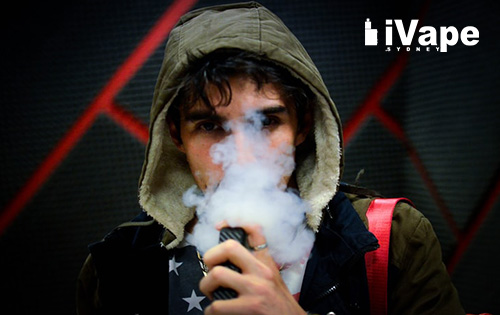
There is a long running joke about people vaping and while the arguments over which is better may just come down to a matter of preference, there is one convincing argument to make a change from buying a packet of cigarettes to purchasing a vape; the environment. Now don’t roll your eyes, you cannot deny that the world is changing, and that reducing waste is a hot commodity. We are in a time where eco-friendly is the way forward and reusable products are at the forefront of production. If you are one of those people who have already switched over their coffee cup, their straws and the rest of their cutlery…but are still smoking cigarettes, just how environmentally conscious can you claim to be?
The image of a straw in the nose of a turtle caused a global stir; leading to many big companies, including McDonalds, to rethink providing plastic straws for their customers. Well if you think straws are the enemy, wait till you hear about the environmental impact of cigarette butts! The Ocean Conservancy states that cigarette butts are the most collected piece of trash on ocean cleans up. Pretty shocking huh?
Why is this an issue? Well the chemicals from the cigarette butts leak into the sand, water and all the surrounds- eventually poisoning the marine life. We aren’t just talking about the oceans though. Discarded cigarette butts can cause fires, contaminate the environment back on dry land and really, they are just kind of an eye sore.
As a society, we have been slowly rectifying the issue of single use plastic. We have metal straws, keep cups, single use items switching to materials like wood, bamboo toothbrushes, banning of plastic bags…if there is an environmental initiative to get behind, it has been the socially conscious and not mention, it’s a pretty trendy thing to get around. If we are making these efforts, what are the eco-friendly alternatives to smoking cigarettes? Are we asking you to quit? No not that extreme but there is one thing that you can do to minimize the environmental impacts of smoking…vaping.
How is vaping more environmentally friendly you may ask? Well glad you did ask because it is, and the main reason is the one solution that we’ve been using for every eco-friendly alternative; re-usable. Since a pen is reusable, it minimizes the environmental impact of smoking. Not only does it reduce the problem of waste, but it also addresses other ways cigarettes are harmful to the environment. Air pollution/second-hand smoke? E-Cigarettes only need a small amount of vapour, so they do not emit as much toxins and pollution into the air. Not only this, most have rechargeable batteries, so you do not even have to worry too much about the waste associated with battery disposing.
If you are on the fence about switching from tradition cigarettes to e-cigarettes/vaping, here is some food for thought. While the health benefits and impacts are still being discussed, there is no denying how making the switch can influence our environment for the better. In short…save the turtles, switch to a vape.
So hurry and shop in our store! iVape.Sydney in Sydney NSW offers you a variety of vaping products. You will not regret getting your first vape starter kit in Sydney and will certainly be back for more. We are one of the best and leading companies that cater to your vaping needs.
Call us NOW at (02) 9597 4080 or visit our website https://ivape.sydney for more info and get all the vaping products you have got your eyes on! Happy vaping!
*Vaping may be as harmful to your health as tobacco cigarettes, please conduct your own research & vape at your own risk.
Vape Shop Melbourne | Call us Now (02) 9597 4080 iVape Sydney is a vape and eLiquid / eJuice supplier to both public and wholesale customers. For more information, visit our website – https://ivape.sydney/ . We service to the following areas: Adelaide, Brisbane, Canberra, Darwin, Hobart, Melbourne, Perth & Sydney.


/cdn.vox-cdn.com/uploads/chorus_asset/file/19376365/GettyImages_1094080898.jpg)
/cdn.vox-cdn.com/uploads/chorus_asset/file/19376613/GettyImages_1094080912.jpg)
/cdn.vox-cdn.com/uploads/chorus_asset/file/19367044/When_Should_Law_Forgive_978_0_393_08176_3.jpg)


 There is a long running joke about people vaping and while the arguments over which is better may just come down to a matter of preference, there is one convincing argument to make a change from buying a packet of cigarettes to purchasing a vape; the environment. Now don’t roll your eyes, you cannot deny that the world is changing, and that reducing waste is a hot commodity. We are in a time where eco-friendly is the way forward and reusable products are at the forefront of production. If you are one of those people who have already switched over their coffee cup, their straws and the rest of their cutlery…but are still smoking cigarettes, just how environmentally conscious can you claim to be?
 Cornelius Reign Allen